


N-Fab RKR Rails – Rock Sliders Built for Extreme Off-Road Protection
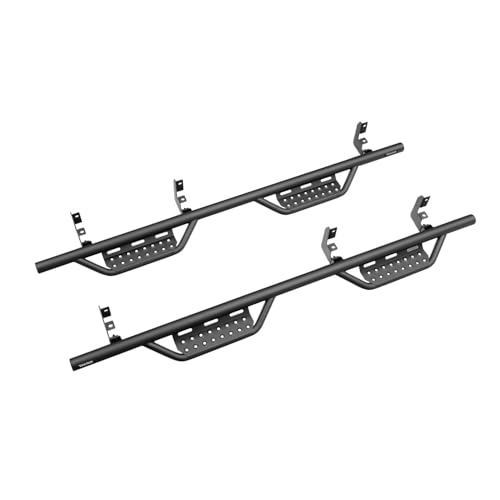
Our N-Fab RKR Rails combine full-length rocker protection with integrated step functionality, engineered for drivers who demand both trail capability and daily usability. The RKR system shields your truck's vulnerable rocker panels from rock strikes, tree stumps, and trail debris while providing a stable step surface for cab entry.
Each rail is fabricated from 0.12-inch wall 1.75-inch tubular steel with reinforced mounting brackets that distribute impact loads across multiple frame points. We've designed the RKR Rails with a recessed step pad that prevents mud and snow buildup while maintaining grip in wet conditions. The black powder-coat finish resists corrosion and trail scarring, and the bolt-on installation integrates with factory mounting points—no drilling required on most applications.
Whether you're crawling technical lines in Moab or navigating forest service roads, the RKR Rails deliver the rocker protection serious off-roaders expect from N-Fab's engineering team.
- 0.12-inch wall 1.75-inch tubular steel construction for impact resistance
- Reinforced mounting brackets attach at multiple frame points
- Recessed step pads with aggressive texture for all-weather traction
- Black powder-coat finish resists corrosion and trail damage
- Bolt-on installation uses factory mounting points (vehicle-specific)
Steel Construction & Impact Engineering
We build every RKR Rail from 0.12-inch wall tubular steel selected for its balance of weight and impact absorption. The 1.75-inch diameter tubing provides the structural rigidity needed to deflect rock strikes without permanent deformation, while the welded seam construction eliminates weak points that can fail under repeated trail stress.
The reinforced mounting bracket system is the foundation of the RKR’s protection capability. Each bracket attaches to factory frame locations with grade-8 hardware, distributing impact energy across multiple mounting points rather than concentrating stress at a single bolt. This multi-point attachment prevents the leverage effect that can bend or tear single-point sliders during a side impact.
Step Functionality & Trail Clearance
Recessed Step Design
The RKR Rails feature recessed step pads positioned at door thresholds for natural entry and exit. Unlike flat-surface sliders that accumulate mud and ice, our recessed design sheds debris automatically as you drive. The step pads themselves use an aggressive diamond-plate texture that maintains grip even when wet or snow-covered.
Ground Clearance Considerations
We position the RKR Rails to protect rocker panels without sacrificing approach or departure angles. The rail sits tight to the body line, minimizing side protrusion while still providing a 500-pound weight rating per side. For drivers running larger tires or lift kits, the RKR’s profile won’t reduce your breakover angle on steep climbs or descents.
Installation & Vehicle Compatibility
RKR Rails install using your truck’s existing frame mounting points—no drilling or cutting required on most applications. We include vehicle-specific hardware kits with every set, pre-matched to your make, model, and year. The bolt-on design allows for installation with basic hand tools in approximately 90 minutes per side.
Each rail arrives with detailed instructions and labeled hardware. The mounting brackets locate precisely at factory points, so alignment is straightforward even for first-time installers. We recommend a torque wrench for final hardware tightening to meet our specified torque values (typically 35-45 ft-lbs depending on mounting location).
More Heavy-Duty Protection from N-Fab



What people are saying
RKR Rails: What Off-Road Drivers Need to Know
RKR Rails are designed to work with factory and lifted configurations. The rails mount to factory frame points, so suspension lifts don't affect fitment. However, verify that your specific year, make, and model are listed in our compatibility chart—cab configuration (crew cab, extended cab, regular cab) determines rail length.
If you're running significantly larger tires (35-inch or above), check that the rail's side protrusion doesn't interfere with full steering lock. Most applications have adequate clearance, but extreme tire sizes may require spacers or slight trimming depending on wheel offset.
The RKR Rails shield your rocker panels from impacts up to approximately 12 inches above the frame rail, covering the vulnerable lower door and cab corner areas. The 0.12-inch wall steel absorbs and deflects rock strikes that would otherwise dent sheet metal.
The multi-point mounting system distributes impact loads across the frame, preventing the leverage effect that can bend thinner sliders. For extreme rock crawling where body damage is likely, RKR Rails protect the most vulnerable areas but won't prevent every possible impact to upper door skins or fenders during rollovers.
Most truck owners install RKR Rails at home with basic hand tools. You'll need a socket set, torque wrench, and jack stands to safely access the frame mounting points. The bolt-on design uses existing frame holes, so no drilling or welding is required.
Plan for 90 minutes to two hours per side for your first installation. The rails are heavy, so a second person helps with alignment during initial fitting. Our instructions include torque specifications for all hardware—following these values ensures proper clamping force at each mounting point.
RKR Rails sit tight to the body line and typically match or slightly exceed the ground clearance of your factory rocker panels. The rail's lowest point is generally level with your frame rails, so you won't lose breakover angle or scrape on obstacles your truck could previously clear.
If you've added a suspension lift, the RKR Rails maintain the same relationship to the body—your increased ground clearance remains intact. The step pads protrude slightly from the body line but are recessed into the rail tube, minimizing side clearance impact on narrow trails.
Each RKR Rail is rated for 500 pounds of static step weight per side. This capacity applies to the step pad areas located at door thresholds. The rating assumes proper installation with all mounting hardware torqued to specification.
The 500-pound rating covers entry and exit loads, including gear-laden users stepping up into tall lifted trucks. For dynamic loads like rock impacts, the tubular steel construction and reinforced brackets handle significantly higher forces without permanent deformation.
Wash RKR Rails regularly with soap and water to remove trail debris, mud, and road salt. Avoid pressure washing directly at mounting brackets, which can force water into bolt holes and promote corrosion at contact points.
Inspect the powder coat after trail runs for chips or scratches. Small chips can be touched up with rust-inhibiting primer and high-temp black paint. For deeper gouges exposing bare metal, clean the area thoroughly, apply primer, and finish with matching paint to prevent rust spread. The powder coat is durable but not indestructible—proactive touch-ups extend rail life significantly.
RKR Rails replace factory running boards—they cannot install simultaneously due to overlapping mounting points. You'll need to remove OEM steps before installing the rails.
Factory mudflaps typically remain compatible, though some applications require slight trimming of the mudflap's inner edge where the rail brackets mount. Check your specific vehicle's configuration—crew cab trucks usually have more clearance than extended cabs. Our installation instructions note any mudflap interference for your particular make and model.